


Description
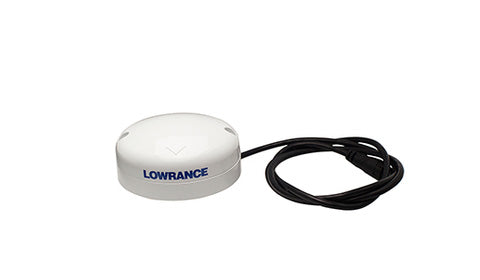
Point-1 GPS Antenna with Built-in Compass.
The Lowrance Point-1 is the ideal position and heading device. The Point-1 provides extremely accurate and rapid boat position and speed updates. In addition – unlike other position-only antennas – the Point-1 provides heading for accurate boat direction at any speed and for radar/chart overlay.The Point-1 easily connects to any HDS Gen2, HDS Gen2 Touch or Elite-7 display or any NMEA 2000 network. It is fully waterproof and can be pole or surface mounted on any boat.
Key features
- NMEA 2000® position and heading sensor
- Supports GPS and GLONASS, Galileo-capable with future software update
- Supports SBAS including WAAS/EGNOS/MSAS
- 10 Hz updates for smooth and accurate location
- Integrated electronic compass provides 10Hz heading for chart stabilization and radar overlay, plus accurate course over ground even at low speeds
- Compact, rugged design for all marine environments and fully waterproof
- Includes spat/pole mount
- Not recommended for use with MARPA or Autopilot
In the box
- 1 x N2K-T-RD Network T-Connector
- 1 x N2KEXT-15RD 15ft Network Extension Cable
PRODUCT DETAILS
- NMEA 2000® position and heading sensor
- Supports GPS and GLONASS, Galileo-capable with future software update
- Supports SBAS including WAAS/EGNOS/MSAS
- 10 Hz updates for smooth and accurate location
- Integrated electronic compass provides 10Hz heading for chart stabilization and radar overlay, plus accurate course over ground even at low speeds
- Compact, rugged design for all marine environments and fully waterproof
- Includes spat/pole mount
- Not recommended for use with MARPA or Autopilot
- 1 x N2K-T-RD Network T-Connector
- 1 x N2KEXT-15RD 15ft Network Extension Cable
No exploded diagram available for this product.
No compatible transducers listed for this product.
Lowrance HDS PRO 9. No Transducer
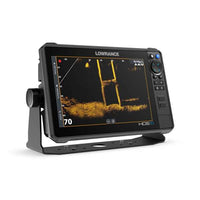
Lowrance HDS PRO 10. No Transducer
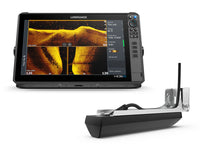
Lowrance HDS PRO 16 with Active Imaging HD
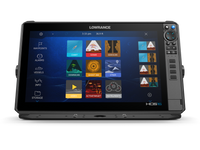
Lowrance HDS PRO 16. No Transducer
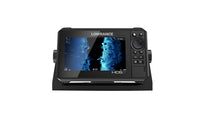
Lowrance HDS-7 Live No Transducer
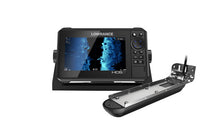
Lowrance HDS-7 Live 3-in-1 Transducer
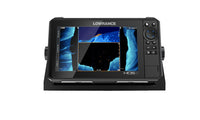
Lowrance HDS-9 Live No Transducer
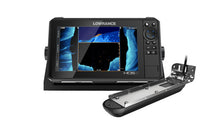
Lowrance HDS-9 Live 3-in-1 Transducer
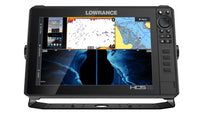
Lowrance HDS-12 Live No Transducer
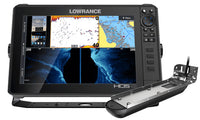
Lowrance HDS-12 Live 3-in-1 Transducer
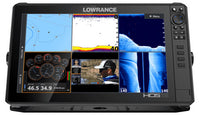
Lowrance HDS-16 Live No Transducer
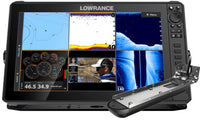
Lowrance HDS-16 Live 3-in-1 Transducer
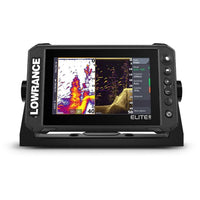
Lowrance Elite FS 7 No Transducer
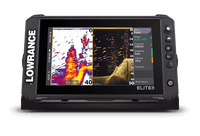
Lowrance Elite FS 7 with Active Imaging 3-in-1 Transducer
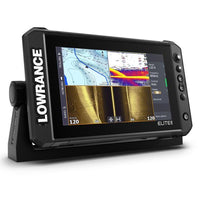
Lowrance Elite FS 9 No Transducer
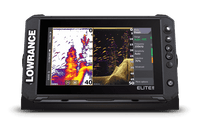
Lowrance Elite FS 9 with Active Imaging 3-in-1 Transducer
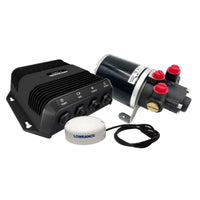
Lowrance NAC-1 Outboard Hydraulic Pilot Pack
General
| Warranty | 2 years |
| Receiver type | GPS/GLONASS, L1 C/A code 1.575 GHz / L2 C/A code 1.602 GHz |
GPS
| Channels | 32 channels |
| Satellite correction | SBAS: WAAS / EGNOS / MSAS / DGPS |
| Position update rate | Up to 10 Hz (1, 5, 10) |
| Horizontal accuracy | 3 m (9.8 ft) |
| Cold start | 50 sec |
| Start-up time | 3 sec |
| Satellite reacquisition | 5 sec |
Compass
| Heading accuracy | +/- 3° |
| Rate of turn accuracy | +/- 3° |
| Roll/Pitch accuracy at 30° | +/- 1° |
| Sensor type | Solid state electronic compass |
Electrical
| Input voltage | 9-18 V DC (reverse polarity protected) |
| Power consumption | < 2 W |
| Current consumption | < 100 mA at 12 V DC |
Connectivity
| Data I/O protocol | NMEA 2000 |
| Antenna connector | NMEA 2000 Micro-C |
| Cable | Molded NMEA 2000 drop cable 1.2 m (4 ft) |
Environment
| Waterproof rating | IPX7 |
| Operating temperature | -25°C to +60°C (-13°F to +140°F) |
| Storage temperature | -40°C to +85°C (-40°F to +185°F) |
| Humidity | 40°C, 93% RH, operating |
Physical
| Dimensions (Dia x H) | 90 mm dia x 38 mm H (3.54 x 1.50 in) |
| Weight | 0.14 kg (0.3 lbs) approx |
| Compass safe distance | 0.5 m (20 in) |
| Mounting | Flush mount / standard pole mount |
Approvals
| Compliance | CE (RED 2014/53/EU), UKCA |


